
How Bench Warrants Work in Koochiching County
A bench warrant is a court order telling law enforcement to bring someone before the bench. In Koochiching County it normally grows out of a court-related failure, not a fresh criminal charge. The judge already holds the case, and the warrant simply pulls the person back into court. Minnesota's own sources use the term, and the case file carries the entry. What the county does not publish is a stand-alone bench warrant list, a local bond schedule, or any page of warrant labels. Everything runs through one case record and one court office, so the clerk who answers the phone sees what the judge signed. That single file is the warrant record for practical purposes here.
Koochiching Failure to Appear Triggers
Minnesota's citation process sets the clock. Official court guidance gives a person 30 days from the date the citation is filed with the court to pay or schedule an appearance, and the citation itself warns that failing to appear or contact the court may result in a warrant. That is the ordinary path from paper ticket to court warrant in Koochiching County. Other triggers live in the case record rather than any published list: a missed criminal or traffic hearing, a release-condition violation, or a court-directed appearance that never happened. The exact reason belongs to the case. Ask the court instead of guessing from the charge. Note: A missed date is not the same as a missed payment, and the two can lead to different court responses.
Bench Warrant Issuance in Koochiching County
A District Court judge signs the warrant and sets any bail and release conditions. The same statewide rule that governs arrest warrants controls the document's contents: a signature, the defendant's name or a certain identifying description, a description of the offense, and release terms. From there the case record carries the story in Koochiching County. MCRO can show a warrant flag once the entry is public, and later case events track what follows. An unserved warrant may not show up at all, though, because arrest-warrant index data can stay confidential until custody, service, or appearance. Minnesota Rule of Criminal Procedure 3 sets the content, bail, execution, and prompt-appearance requirements for the warrant.
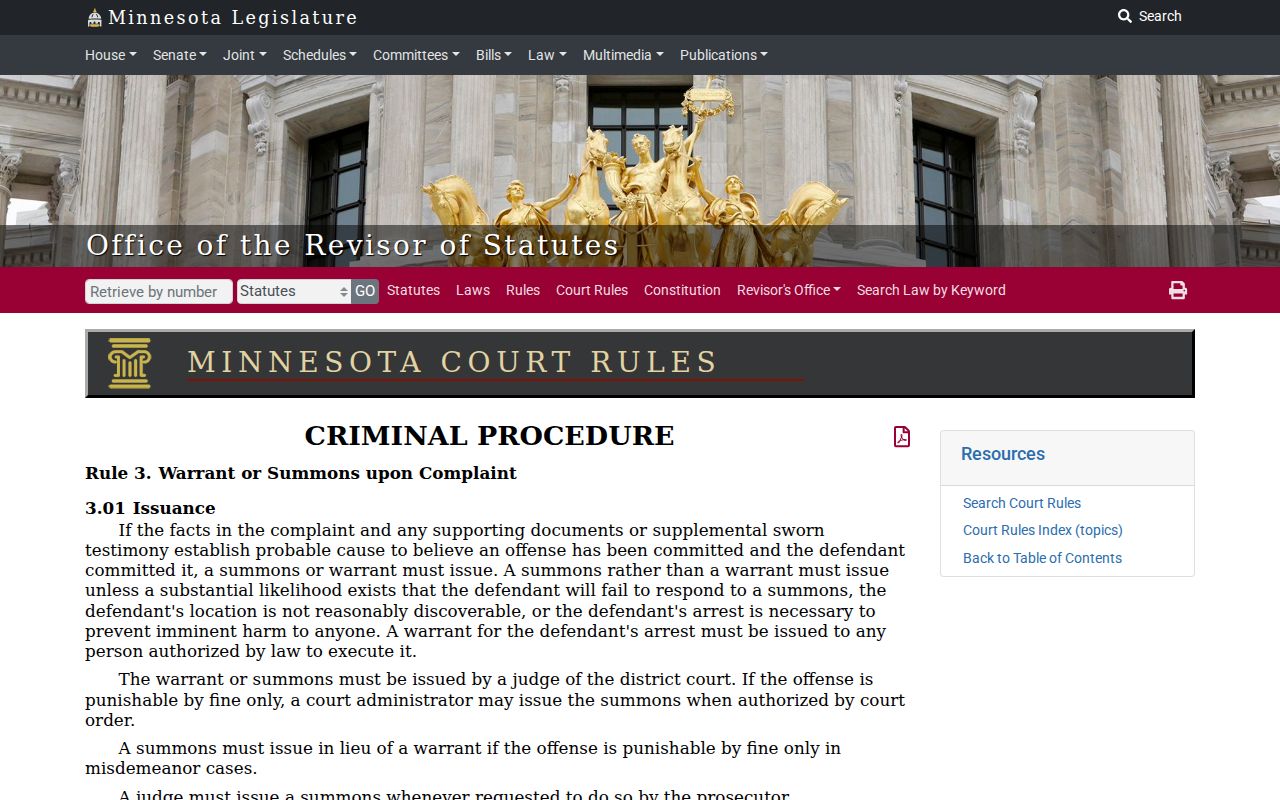
Because the rule controls the document, you can ask the court precise questions about what a Koochiching County bench warrant required when the judge signed it.
No Separate Koochiching Municipal Court Counter
Many people assume a city or township court holds their bench warrant. In this county, that is a wrong turn. Minnesota's current court structure lists no justice-of-the-peace court and no municipal court for Koochiching, and the city pages do not identify separate municipal-court warrant clerks. Koochiching County District Court, sitting in the Ninth Judicial District, handles the criminal and traffic cases. Court Administration at the courthouse is the public access point. A city office can help you figure out where a citation came from, but it is not a warrant counter.
How Bench and Arrest Warrants Differ
The word bench describes where the order came from, not the charge behind it. The comparison below shows how the three common Minnesota processes behave.
| Point | Bench or FTA warrant | Arrest warrant |
|---|---|---|
| What starts it | A missed appearance or court-order failure | A criminal complaint supported by probable cause |
| Who signs it | The judge handling the case | A judge, under the same criminal rules |
| Typical purpose | Bring the person back before the court | Authorize taking the person into custody |
| Public visibility | Case entry, subject to the same access limits | Index data can stay confidential until service |
| Usual resolution | Reset, recall, quash, or a court appearance | Counsel, surrender, or bond |
Koochiching Sign-and-Release Warrants Do Not Arrest
One Minnesota failure-to-appear warrant works differently by design. Under Minn. Stat. 629.415, a limited first-failure misdemeanor situation can produce a sign-and-release warrant. It requires no bail and does not authorize arrest. An officer who encounters the person hands over a new appearance notice, releases them at the scene, and the warrant is inactivated. That outcome depends on the offense, the notice, any prior failure history, and other factors, so do not assume it fits a Koochiching County case. The court can say whether the file carries this status, and the statute explains the conditions. Minn. Stat. 629.415 sets out the summons, notice, release, and inactivation duties.
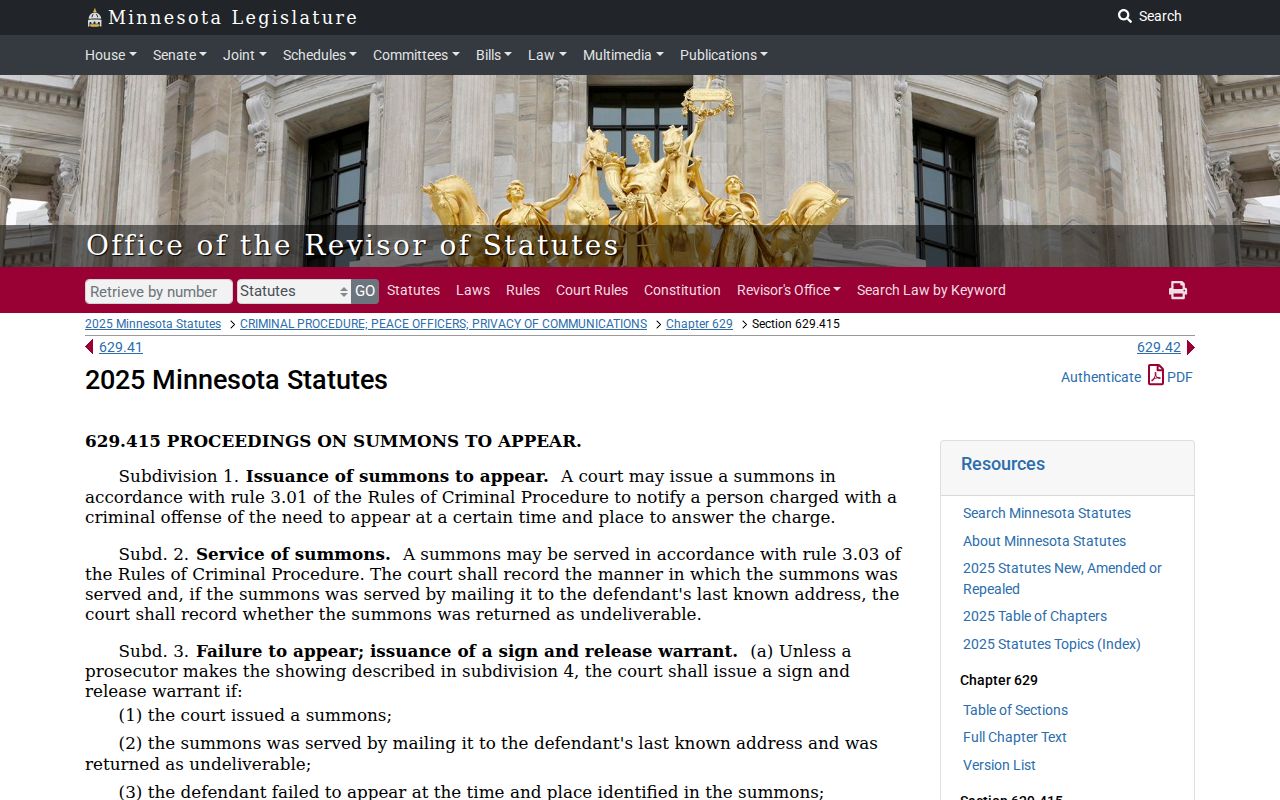
The sign-and-release rule shows why a Koochiching County bench warrant should be identified by type before anyone acts on it.
Clearing a Bench Warrant in Koochiching County
Clearing a bench warrant means asking the court to resolve the failure that created it. No payment portal does this automatically. No private website can do it at all. Work with an attorney where the case is serious, and start with the court file in Koochiching County.
- Find the case in MCRO by citation or case number, and select Koochiching.
- Read the Warrants section and the case events, and note any recall, quash, or inactivation entry.
- Call Court Administration at 218-283-1160 and ask what the court requires next.
- Ask about a reset hearing, an appearance, bond, or a motion to recall or quash.
- If the court directs you to the sheriff, call 218-283-4416 about surrender routing before you travel.
Do not treat a scheduled hearing as a recalled warrant. The calendar entry and the recall are separate events, and only the court can confirm the change.
Asking Koochiching Court Administration for a Reset
Koochiching County Court Administration is the office that reads the file to you. One call covers most of it. Staff can confirm what the file shows, whether a hearing is scheduled, and what the bond entry says. They cannot give legal advice or promise an outcome. So go in prepared. Ask which case generated the bench warrant, whether the warrant is still active, and what release conditions were set. Ask what appearance or filing the court expects next, and keep the case number in front of you the whole time. If a missed hearing traces back to a notice that never arrived, an illness, or a transportation problem, say so and ask how to raise that with the court. Note: Koochiching County publishes no local motion-to-recall form and no filing fee for that motion, so ask what to file rather than assuming.
Koochiching County Courts That Issue Bench Warrants
The list here is short, and that helps. One trial court serves all of Koochiching County. Its administrative office is the public access point for every case type that can produce a bench warrant.
| Court or Office | Warrant-Related Work | Contact |
|---|---|---|
| Koochiching County District Court | Criminal, traffic, and FTA warrant process | 715 4th Street; 218-283-1160 |
| Court Administration | Case status, hearings, copies, and court routing | Weekdays 8:00 a.m. to 4:30 p.m. |
| Sheriff and Law Enforcement Center | Custody, service, and jail records | 715 4th Street; 218-283-4416 |
| Ninth Judicial District | District administration and county list | mncourts.gov/find-courts/ninth-judicial-district |
Koochiching Family and Juvenile Bench Warrants
Family cases work differently. Koochiching County District Court hears those matters, but party-submitted family documents carry extra access limits. The same goes for juveniles. Minnesota law wraps juvenile delinquency records and law-enforcement records of children in special privacy protections. What does that mean for a bench warrant lookup? A public case search may show less, or nothing, even when a court order exists. Court Administration can identify the case type and explain which access rule applies, and an attorney can advise the person involved.